Globular cluster
Messier 15
Also M15 · NGC 7078
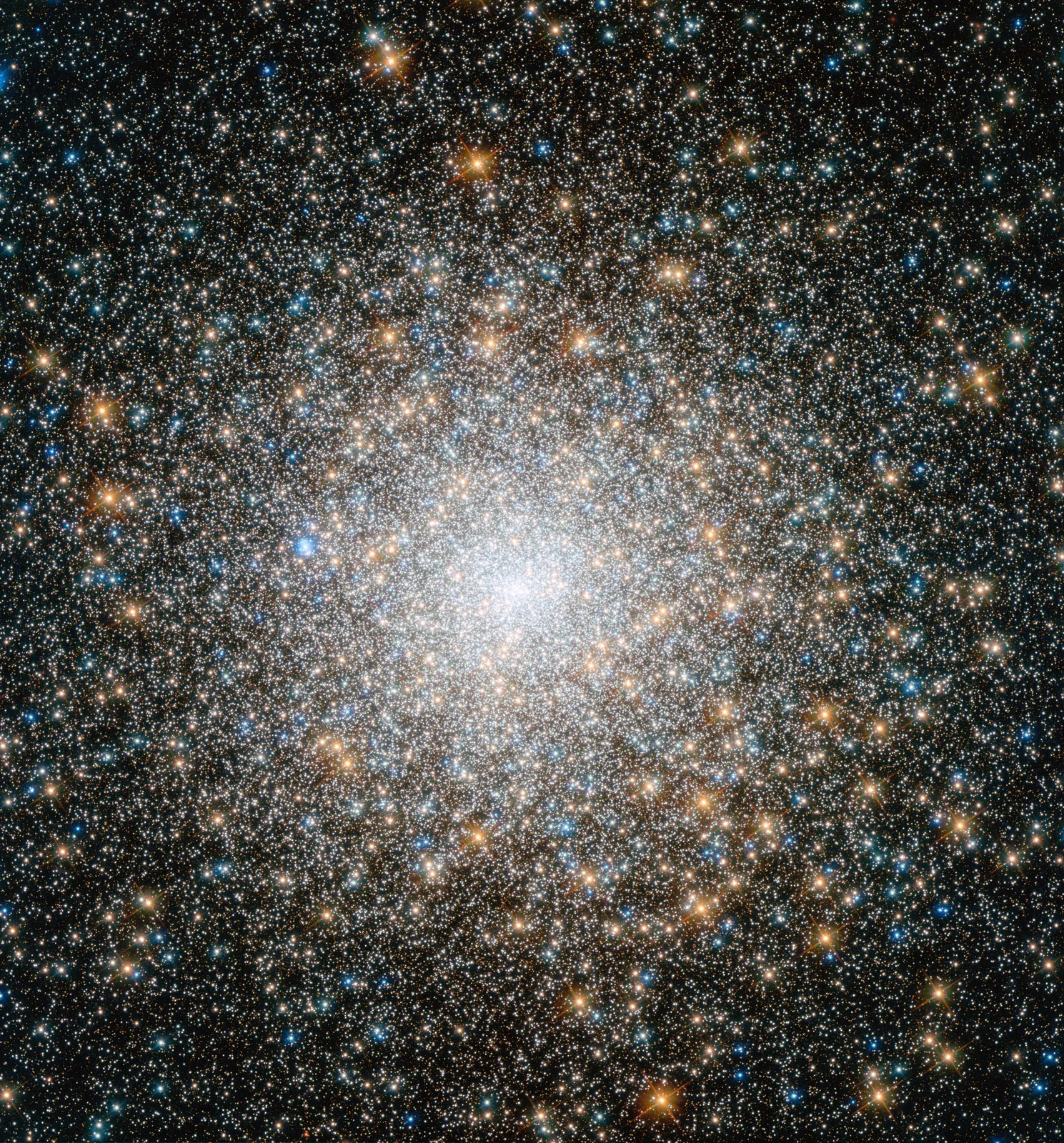
One of the densest globular clusters known, with a collapsed core packed with stars.
Measured
- Distance
- about 34,930 light-years (published estimates 34,600–35,260)
- Size
- about 176 light-years across (approximate)
- Constellation
- Pegasus
- Position (J2000)
- RA 21h 29m 58s, Dec +12.17°
How far, from the Sun
About 34,900 light-years. To cross it:
- Light34,900 years
- Voyager 1's speed621 million years
- Driving at 100 km/h377 billion years
Voyager 1 at the speed it moved outward over the year to 2026-10-25 (JPL Horizons). Driving: nonstop, never refuelling.
Facts
- Its mass is about 520,000 times the Sun's.
How it was found
- Pease 1, found in it in 1928, was the first planetary nebula known inside a globular cluster.
- Jean-Dominique Maraldi discovered it in 1746.
Where this comes from
- Baumgardt & Vasiliev 2021, Gaia EDR3 (10.71 ± 0.10 kpc)
Every catalogue Ouranos draws is credited on the credits page.