Star with planets
LHS 1140
Also GJ 3053
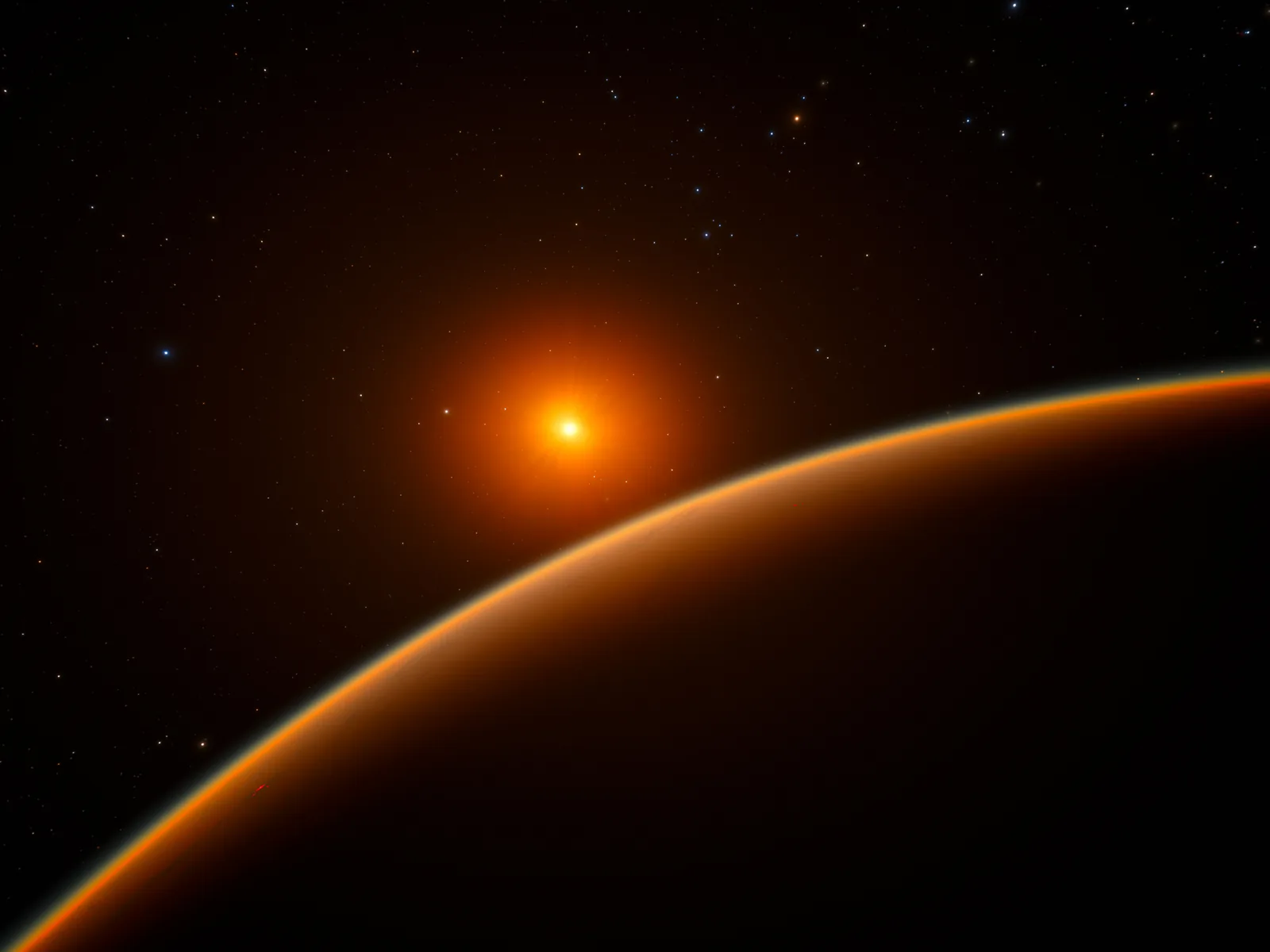
A red dwarf whose planet LHS 1140 b, probably a water world or a small mini-Neptune, lies in its habitable zone and has been studied by JWST.
Measured
- Distance
- 49 light-years
- Constellation
- Cetus
- Position (J2000)
- RA 0h 44m 59s, Dec −15.27°
How far, from the Sun
48.8 light-years. To cross it:
- Light48.8 years
- Voyager 1's speed867,000 years
- Driving at 100 km/h527 million years
Voyager 1 at the speed it moved outward over the year to 2026-10-25 (JPL Horizons). Driving: nonstop, never refuelling.
Facts
- LHS 1140 b has about 5.6 Earth masses and orbits in its star's habitable zone.
- Its year lasts about 25 days.
- Its low density suggests it may be rich in water, at 9 to 19% of its mass. JWST data in 2024 ruled out a hydrogen-rich atmosphere, but did not show water.
Where this comes from
- Gaia DR3 parallax 66.8287 ± 0.0479 mas, Gaia DR3 2371032916186181760 (Gaia Collaboration 2023, A&A 674, A1)
Every catalogue Ouranos draws is credited on the credits page.